Getting Around the Algarve Without a Car: What Works, What Doesn't
TL;DR
Getting around the Western Algarve without a car became meaningfully easier in 2025–2026: the A22 motorway dropped its tolls in January 2025, lowering taxi and transfer costs, and the regional Vamus bus network added a €40-a-month unlimited pass alongside a fleet renewal. The direct Aerobus 56 from Faro Airport to Lagos costs €17 and takes under two and a half hours; the regional train is cheaper at roughly €7.50 but requires a short connection from the airport into Faro. Ride-hailing apps work reliably in Lagos, Portimão, and Faro, but become patchy west of Lagos and in Sagres. The honest exception is Costa Esuri, home of Sun Villa: public transport from Seville is thin, and renting a car remains the practical choice.
Key Takeaways
- •Aerobus 56 is the cheapest direct route from Faro Airport to Lagos: €17, no transfer, roughly 5-7 daily departures in high season, dropping to 2-3 in winter
- •The A22 motorway toll abolition (Lei n.º 37/2024, effective 1 January 2025) lowered the cost of taxis, transfers, and ride-hailing across the whole western Algarve corridor — a change most existing guides still do not reflect
- •Ride-hailing apps (Bolt, Uber) are reliable in Lagos, Portimão, and Faro, but coverage thins noticeably west of Lagos, in Sagres, and disappears almost entirely around Costa Esuri — always keep a local taxi number as backup
- •When Faro flights are expensive, Lisbon is a real alternative: the train via Tunes or a Rede Expressos coach both reach Lagos in about four hours for €20-35 or less
- •Costa Esuri and Sun Villa are the honest exception: public transport from Seville Airport is thin and slow, and renting a car locally remains the practical choice for that stay
The A22 toll change is the reason this guide needed rewriting
Most existing guides to getting around the Algarve without a car were written before 1 January 2025 — the date the A22 motorway, the region's main east-west spine connecting Lagos to the Spanish border, stopped charging tolls. This followed Lei n.º 37/2024, published in August 2024, which abolished tolls on several former SCUT motorways across Portugal, the A22 among them. It was reconfirmed as permanent in April 2025.
This matters for car-free travellers specifically because it changes the economics of every taxi, private transfer, and ride-hailing trip along the corridor. A journey that used to include a toll cost now doesn't. It is a small detail with a real effect: taxis and transfers along the A22 corridor are measurably more competitive than they were two years ago, and it is worth knowing this before comparing prices, since several older guides still describe the A22 as a tolled road.
From Faro Airport: five ways to reach Lagos and Alvor
The Aerobus 56, operated by Vamus Algarve, is the simplest and cheapest direct option: a single bus from the airport all the way to Lagos, stopping at Alvor along the way, for €17 one-way (€15 to Alvor). The journey takes roughly 1h55–2h20 to Lagos, or about 1h35 to Alvor. In high season (May–October) there are 5–7 daily departures; in winter this drops to 2–3, so an evening arrival on a low-season flight is worth planning around. No reservation is possible — it is a turn-up-and-go service, payable in cash to the driver or in advance via the Vamus app.
The regional train is cheaper but requires an extra step, since the airport itself has no station. Take the local bus (line 14 or 16, €2.70) or a short taxi ride (€10–15) into Faro, then the CP regional service towards Lagos — about 10 trains a day, roughly 1h40–1h45, for approximately €7.50. It stops at Mexilhoeira Grande, about 3km from Alvor village, so a short taxi or walk covers the final stretch there.
For groups of three or four, Bolt or Uber is often the most efficient choice: both operate reliably at the airport with a dedicated pickup zone, at roughly €60–90 to Lagos or €55–75 to Alvor, taking around 50–60 minutes via the now toll-free A22. A taxi from the rank costs somewhat more (€85–120, plus a ~20% surcharge at night or weekends) but needs no booking. For families, late arrivals, or anyone with substantial luggage, a pre-booked private transfer (€80–100 to Lagos, €70–95 to Alvor) offers a fixed price and a driver waiting with a name board.
The Lisbon route nobody considers
When flights to Faro spike in price — this happens reliably in May, June, and December — flying into Lisbon and continuing overland is a real, underused alternative. From the airport, the metro red line reaches Oriente station in about 10 minutes (€1.85). From Oriente, Alfa Pendular or Intercidades trains run towards Faro five times daily combined, with most travellers changing at Tunes onto a regional service that connects directly to Lagos. Total journey time is about 4h30, and total cost — including advance-purchase discounts of up to 65% — typically comes to €20–35.
An even cheaper option exists for those without a fixed schedule: Rede Expressos and FlixBus coaches run from the Sete Rios terminal (reachable by metro from the airport) directly to Lagos, around 34 daily departures on Rede Expressos alone, taking 3h20–4h25 for advance fares as low as €5–25. It is a longer day, but for a family or a group booking last-minute, it is frequently the cheapest way into the western Algarve from any direction.
Once you're here: Lagos, Alvor, and Sagres
The CP regional line remains the backbone for anyone based near a station. Faro to Lagos takes 1h40, Portimão to Lagos 22 minutes, and Mexilhoeira Grande (for Alvor) 12 minutes — all at low single-digit-euro fares.
The Vamus bus network underwent a genuine overhaul in the second half of 2025: a region-wide "Passe Algarve" launched in September at €40 a month, valid on every Vamus route, alongside a fleet renewal of more than €6 million covering roughly 130–140 buses (all now with onboard Wi-Fi) and the renovation of over 3,000 bus stops. A new route network took effect from 1 December. For anyone staying two weeks or more, or working remotely from a rental, the monthly pass is worth comparing against the cost of paying per trip. For day trips, route 47 runs Lagos to Sagres for €6.20 each way, about 9 weekday departures between roughly 07:00 and 18:30 (fewer at weekends), with some extending to Cabo de São Vicente.
Within Lagos itself, the local A Onda urban network (distinct from Vamus) covers Meia Praia, Batata, Pinhão, Dona Ana, and Porto de Mós for €1.20 a ride. Ride-hailing apps are reliable in Lagos, Portimão, and Faro — good coverage, drivers generally easy to find. That reliability drops off noticeably heading west: Sagres, Vila do Bispo, and Aljezur see patchy to non-existent coverage, particularly for a return trip. The practical rule for that stretch of coast: keep the local taxi number saved (Central de Táxis de Lagos: +351 282 762 469) and, if using an app to get there, pre-book the trip back rather than assuming a driver will be available later.
The bicycle option, and why it works well specifically in Lagos
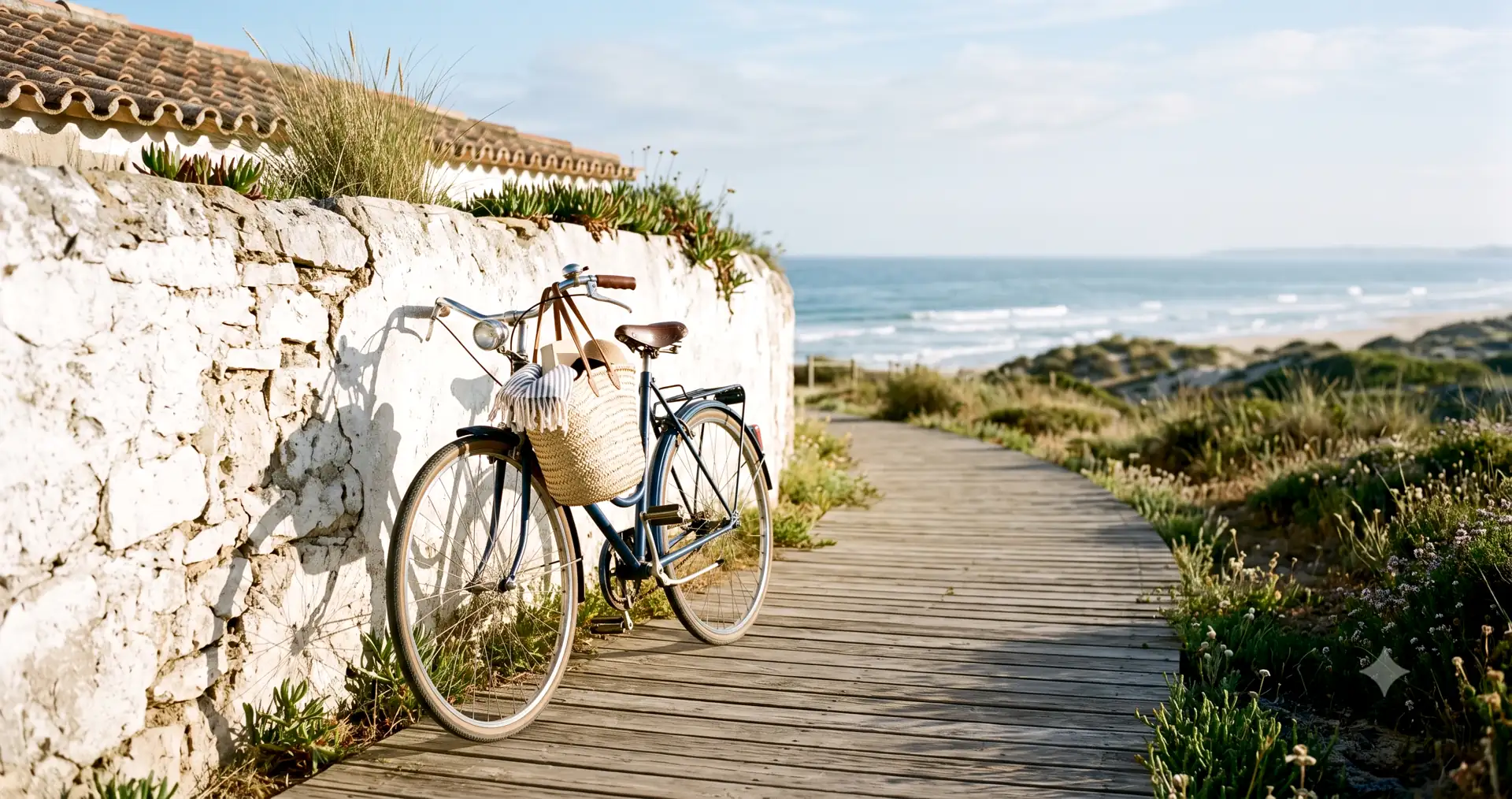
Lagos has a traffic-free cycling path behind the Meia Praia dunes that most visitors never discover. It runs from the marina footbridge eastward toward Alvor — about 22km, roughly 1h15 on an e-bike, largely away from traffic. Several operators rent e-bikes in Lagos (Musette Bike, Bike Rental Algarve, CCT Bike Rental, Bike-e Algarve), typically €30–45 a day with discounts for three or more days.
This is a strong option specifically for couples or small groups who want mobility without a car but find bus timetables limiting — the ride to Alvor along this path is one of the more pleasant ways to see that stretch of coast. The wider Ecovia do Litoral, a 214km coastal route running the length of the Algarve, is scenic but genuinely demanding west of Lagos (rolling hills, some exposed EN125 sections) and is better suited to confident cyclists or an organised day tour than a casual outing.
Costa Esuri: the one honest exception
Every section above describes a western Algarve that has become progressively easier without a car. Costa Esuri, the development near Ayamonte where Sun Villa is located, is the exception, and it is worth being direct about it rather than overselling a thin bus timetable.
From Seville Airport, the direct bus connection to Ayamonte is limited — closer to one daily direct service than a reliable timetable — and most travellers end up connecting via Seville's Plaza de Armas terminal, which adds real time. A pre-booked private transfer runs €140–200 for the 1h30 drive; Uber, Bolt, and Cabify all operate in Seville and can get you to Costa Esuri for roughly €120–180, but coverage for the return trip from Ayamonte is noticeably patchier than the outbound leg.
For stays of four nights or more, renting a car at Seville Airport is normally the most practical choice — daily rates typically run €25–50 in shoulder season, and Costa Esuri is a suburban, low-density area not well served by transit of any kind. For those already in the Algarve without a car and curious about a Seville day trip, there is a slower, viable route: train or bus to Vila Real de Santo António, then the short Guadiana ferry crossing into Ayamonte, and onward by Damas coach to Seville — genuinely usable, but a full-day undertaking rather than a quick hop.
How LusiberiaStays sets this up before you arrive
The pre-arrival message for each stay recommends a specific route based on flight arrival time and party size. Aerobus for a solo daytime arrival, a pre-booked transfer for a late-night arrival with children, the Lisbon route flagged when it is the cheaper option that week. The property guide, available through the guest portal, lists the local taxi number, the nearest Vamus and A Onda stops, and e-bike rental contacts for guests who want to explore under their own power.
Sun Villa's guide is candid in the other direction: guests are told plainly that a car is the practical choice for that stay, with transfer and car-hire options laid out rather than an optimistic bus itinerary that would not hold up in practice.
The plan is the point
None of this requires giving up on car-free travel in the Algarve — it requires knowing, before landing, which parts of the region reward the attempt and which one does not. Lagos and Alvor, connected by a toll-free motorway, an electrifying rail line, and a renewed bus network with a genuinely useful monthly pass, are easier without a car in 2026 than they have been in years. Costa Esuri is not, and pretending otherwise helps nobody.
The guests who arrive with a plan — the right bus, the right train connection, or, for Sun Villa, the right rental booked in advance — are the ones for whom the Algarve without a car works exactly as well as it should.
Frequently Asked Questions
Sources & References
- Diário da República — Lei n.º 37/2024, de 7 de agosto (A22 toll abolition effective 1 January 2025)
- The Portugal News — A22 Algarve motorway confirmed toll-free (April 2025)
- Infraestruturas de Portugal — Algarve railway line electrification (€25.4M, Faro–VRSA and Tunes–Lagos)
- Sul Informação — Passe Algarve €40/month regional bus pass, launched September 2025
- Vamus Algarve — Official routes and timetables (Aerobus 56, route 47)
- CP — Comboios de Portugal, Algarve regional line timetables
- Rede Expressos — Lisbon–Lagos coach timetables and fares