What Changes When a Stay Is Designed as a System — Not Improvised
TL;DR
The feeling of a good stay — where everything works, nothing needs to be asked, and the space feels natural — is almost never the result of attentive hosts or lucky circumstances. It is the result of a system. When a property is operated as an integrated structure rather than managed reactively, the guest experiences less friction, the asset degrades less, and the operator spends less time solving problems that should not have occurred. This article examines why the industry defaults to reactive management, what that costs in practice, and what changes when the stay itself is treated as an operational instrument — designed in advance, not improvised in real time.
Key Takeaways
- •Reactive management feels like quality because of the effort heuristic: visible host effort is rewarded, but it is usually compensation for a system gap — unclear instructions, miscalibrated supplies, or skipped preventive maintenance.
- •The industry adopted the hotel hospitality model wholesale, but it fits poorly with remote, distributed short-term rentals — producing an operational norm built on improvisation that degrades quietly rather than failing dramatically.
- •A stay designed as a system has four structural layers: pre-arrival design, space configuration, operational continuity, and exception handling — together they make the stay feel effortless by default.
- •At LusiberiaStays, communication is predefined rather than reactive, maintenance runs on preventive cycles instead of alerts, and supplies follow the principle of sufficiency — calibrated by stay duration, guest count, and property type.
- •Every stay generates operational data — message frequency, incidents, maintenance, cleaning time, supply use — that lets the system learn from its own performance and refine its cycles.
- •For owners, a system-designed stay means consistent results across seasons and guest profiles, less dependence on the operator's personal bandwidth, and measurable performance — e.g. 28 predictable managed days out of 30 with one incident resolved within protocol.
Executive Summary
Consider a typical first evening. The guest messages to ask how the heating works. An hour later, they request extra towels. On day two, a minor plumbing issue appears — a dripping tap in the bathroom. The host responds quickly each time: a helpful explanation, a prompt delivery, a plumber arranged within hours. The guest leaves a positive review praising the host's responsiveness.
From the outside, this looks like quality. From a systems perspective, each of those moments is a design failure. The heating instructions were unclear or absent. The towel inventory was miscalibrated. The plumbing had not been inspected preventively. The host's effort was not a sign of excellence — it was compensation for a system that did not exist.
This article explores why the industry confuses responsiveness with quality, what it costs to keep improvising, and what changes when the stay is designed as a system rather than managed as a series of reactions.
1. The Invisible Behaviour
Why reactive management feels like quality
There is a cognitive bias that makes reactive management feel better than it is: the effort heuristic. People tend to assign higher value to outcomes that they perceive as requiring effort. A host who responds within minutes, resolves a problem personally, and follows up with a friendly check-in feels like a high-quality operator — because the effort is visible.
But visible effort is often a symptom of invisible failure. If the guest needed to ask how the heating works, the information architecture failed. If a maintenance issue required emergency resolution mid-stay, the preventive schedule failed. Each of these moments feels like attentive service. Each of them is, structurally, a system gap.
The guest rarely sees this distinction. They experience the resolution, not the root cause. A host who fixes a problem quickly gets a good review. A system that prevents the problem entirely gets no recognition — because there is nothing to notice. This creates a perverse incentive: the industry rewards visible recovery over invisible prevention.
There is also a status quo bias among operators. Many property managers built their businesses on personal responsiveness. Shifting to a system-designed model feels like surrendering that identity — even when systematised stays produce better outcomes for guests, owners, and operators alike.
2. The Common Illusion of the Sector
How the market normalised improvisation
The vacation rental industry grew out of hospitality — a sector where personal attention has always been the marker of quality. This heritage shapes how most operators think about service: more availability equals better experience. Faster reaction equals higher professionalism.
This model works in hotels, where there is a dedicated team, a front desk, and an infrastructure designed for continuous human presence. It works less well in short-term rentals, where the operator is often remote, the properties are distributed, and the margin for error per stay is significantly thinner.
Yet the industry adopted the hospitality model almost wholesale — without adapting it to the structural reality of decentralised property management. The result is an operational norm built on improvisation: problems are solved as they arise, communication is reactive, and the quality of the stay depends on the operator's personal bandwidth on any given day.
This norm persists because it is familiar — and familiarity bias makes people prefer known approaches even when those approaches underperform. The tools and platforms that dominate the industry reinforce it: messaging systems that reward response speed, review systems that reward visible attentiveness, and dashboards that track activity rather than stability.
The cost is rarely visible in any single stay. It accumulates over time: higher operator burnout, inconsistent guest experiences, deferred maintenance that becomes expensive repair, and an owner who receives enthusiastic communication but unpredictable results. The improvisation model does not fail dramatically. It degrades quietly — which is precisely why it persists.
3. Reframing
The stay as an operational instrument
What if the stay was not an event to be managed in real time, but an instrument designed in advance?
This reframing changes the operator's role fundamentally. Instead of being the person who responds to problems, the operator becomes the person who designs conditions where most problems do not occur. The stay is not something that happens to the guest and the property. It is something that is engineered — with inputs, expected outputs, and tolerances for variation.
In practical terms, a system-designed stay has four structural layers:
Pre-arrival design. Every decision that can be made before the guest arrives is made before the guest arrives. Communication cadence is predefined. Information is calibrated to the property and the guest profile. Expectations are set clearly — not through lengthy manuals, but through concise, relevant guidance that reduces the number of questions the guest needs to ask.
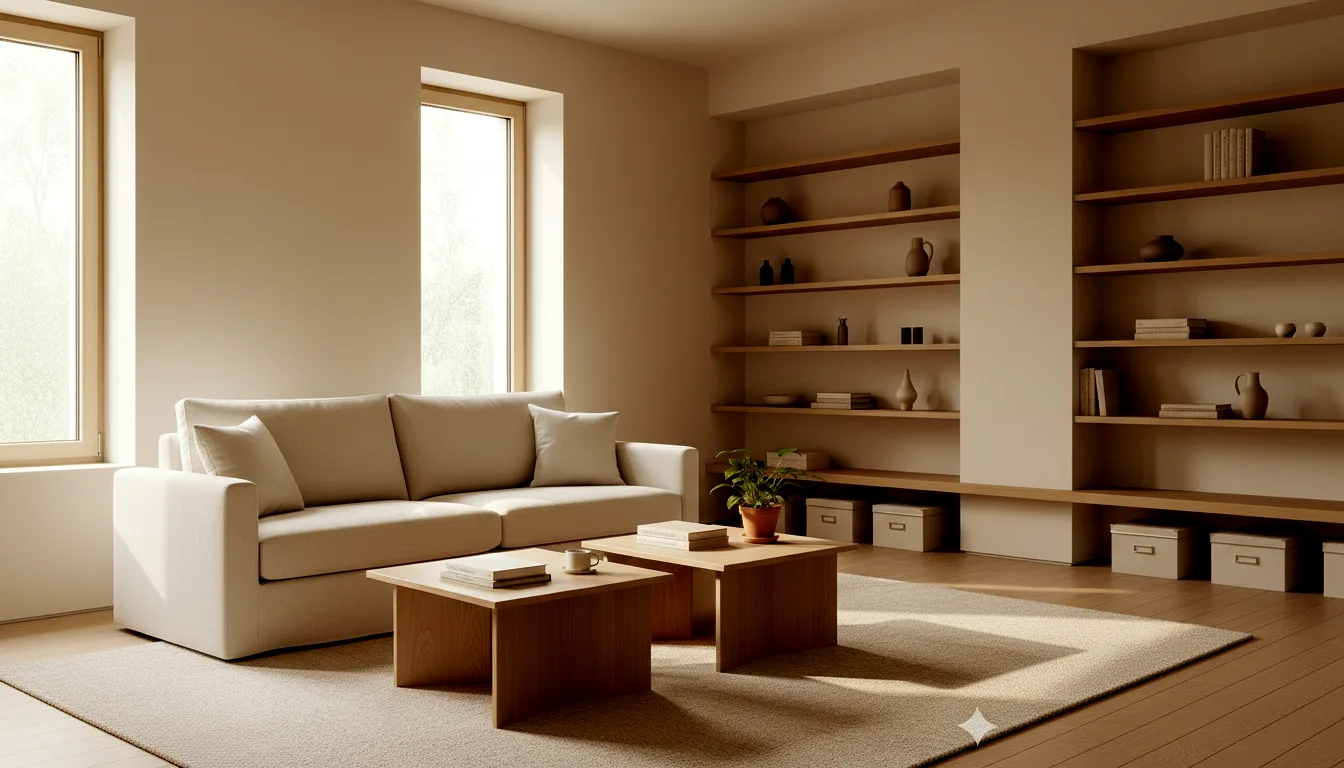
Space configuration. The property is set up so that the right behaviour is the obvious behaviour. Appliances are intuitive or clearly explained at the point of use. Storage is logical. Supplies are sufficient without being excessive. The space itself communicates how it should be used — reducing the need for external instructions.
Operational continuity. Maintenance is scheduled, not reactive. Cleaning protocols are standardised. Supply replenishment follows a cycle, not an alert. Each operational element runs on a cadence that is independent of any single stay — which means the system does not reset to zero with each new guest.
Exception handling. When something does go wrong — and in any system, something eventually will — the response is predefined. Incident severity is classified. Resolution paths are mapped. The operator intervenes with a clear protocol, not with improvisation. This is what makes human contact meaningful rather than compensatory: the guest receives a structured response, not a scrambled one.
When these four layers work together, the result is a stay where the guest feels that everything just works — not because someone is watching in real time, but because the system was designed to produce that outcome by default.
4. The LusiberiaStays Approach
How system design protects the asset and the experience
At LusiberiaStays, every stay is treated as an operational instrument of the asset — not as an isolated event to be managed on the fly. This translates into specific, observable decisions.
Communication is predefined, not reactive. Each property has a communication sequence designed before any guest arrives: confirmation, pre-arrival guidance, check-in support, mid-stay check (for longer stays), and departure coordination. The content is calibrated to the property, the zone, and the expected guest profile. The operator does not need to decide what to say or when — the system defines it. Deviations from the sequence are logged as exceptions, which creates a feedback loop for improvement.
Maintenance runs on cycles, not alerts. Rather than waiting for something to fail, LusiberiaStays schedules preventive maintenance by usage patterns and seasonal cycles. Air conditioning filters are replaced at defined intervals. Plumbing is checked before peak season. Appliance condition is assessed between stays, not during them. The cost of this approach is lower than the cost of emergency repair — and the impact on the guest experience is the difference between a predictable stay and a disrupted one.
Supplies follow the principle of sufficiency. Properties are stocked with what the guest will actually use — calibrated by stay duration, guest count, and property type. Not more, not less. Overstocking creates confusion and waste. Understocking creates friction and communication. The target is a guest who never needs to ask "is there...?" because the answer was already designed into the setup.
Every stay generates operational data. Guest communication frequency, incident occurrence, maintenance interventions, cleaning time, and supply consumption are tracked per stay. This data exists for system refinement. A property where guest questions increase over consecutive stays signals a degradation in information architecture. A property where maintenance incidents cluster around a specific system signals a preventive schedule gap. The system learns from its own performance.
The measurable difference is visible. Properties operating under this model tend to show a reduction in guest-initiated messages during the stay — not because guests are discouraged from communicating, but because fewer questions need to be asked. Mid-stay incidents decrease as preventive maintenance matures. And the ratio of predictable managed days increases as the system accumulates data and refines its cycles.
For property owners, the practical consequence is significant. A system-designed stay produces consistent results across seasons, across guest profiles, and across operational conditions. It reduces the owner's exposure to the operator's personal bandwidth — because the system, not the individual, delivers the outcome. And it makes performance measurable: not "the guests seemed happy" but "this property delivered 28 predictable managed days out of 30, with one S3 incident resolved within protocol."
Conclusion
The best stays are usually the ones where nothing remarkable happens — because the system made the ordinary feel effortless.
For owners, this translates directly: less revenue volatility, fewer emergency costs, better asset preservation, and reporting that reflects what actually happened rather than how it felt. A property managed as a system does not depend on anyone's availability, mood, or memory. It depends on structure — and structure is what compounds.
The shift from improvisation to system is not a shift away from care. It is a shift toward care that is embedded in the design of the operation itself. That is the difference between a host and a business.