Alvor Is Not About Slowing Down. It's About Removing Noise.
TL;DR
Most destinations promise rest by offering more: more activities, more views, more things to experience. Alvor works in the opposite direction. It removes stimulation rather than adding it. Its residential character, low sensory density, and stable daily rhythm create conditions where rest emerges naturally — not as something the guest pursues, but as something the environment produces. This article explores why subtraction is more effective than addition for genuine rest, how the travel industry misunderstands this, and why Alvor is particularly suited for longer stays, families, and guests who need continuity rather than novelty. For property management, understanding this mechanism is what allows the operation to align with the territory rather than work against it.
Key Takeaways
- •Genuine rest is a neurological condition that takes three to four days to begin, not a feature an operator can add on arrival.
- •Alvor is best understood as a low-stimulation environment: it reduces cognitive load through absence — fewer streets, options, people and decisions.
- •The mechanism only works over time, so stays of a week or more let the settling-in effect take hold; short stays leave before it does.
- •At Alvorada the operation is deliberately quiet: minimal communication, a space configured for routine rather than first impressions, and just-enough information.
- •Because Alvor does not photograph dramatically, the market tends to undervalue it — which is an opportunity for operators who understand what it provides.
- •This profile produces operational stability: lower guest communication, fewer mid-stay incidents and longer stays mean a higher ratio of predictable managed days.
Executive Summary
There is a specific moment in a longer stay when something shifts. The guest stops checking the time. They stop planning the next day. They stop feeling that they should be doing something. This moment — when the mind moves from scanning mode to resting mode — is what most people are actually looking for when they say they want to "relax on holiday."
The problem is that most destinations delay this moment or prevent it entirely. High-stimulation environments — even beautiful ones — keep the brain in evaluation mode: deciding where to eat, which beach to visit, whether to go left or right, what to do with the afternoon. Each decision is small. Cumulatively, they are exhausting.
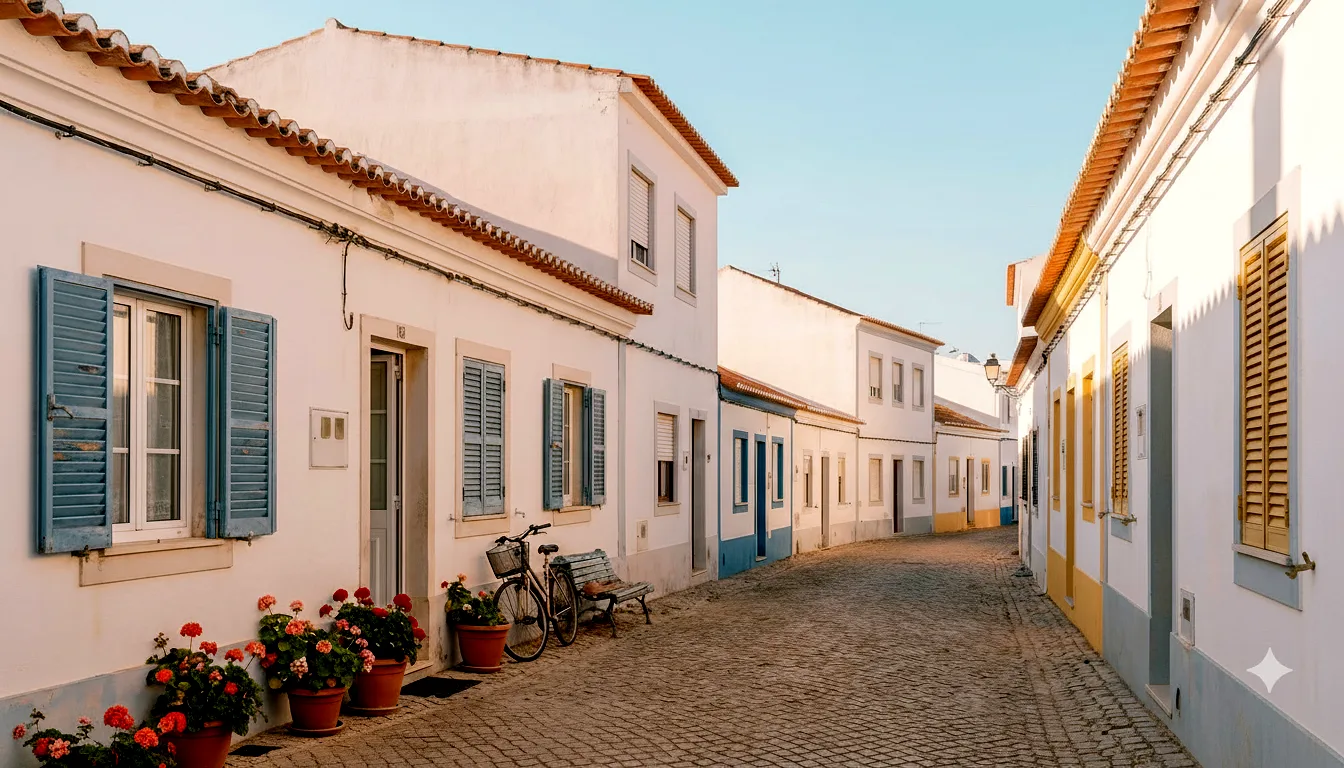
Alvor works differently. It is a small, residential town on the western Algarve coast where very little competes for attention. The streets are quiet. The options are limited but sufficient. The rhythm barely changes from day to day. For many guests, this sounds unremarkable. For the brain, it is precisely what allows rest to begin.
1. The Invisible Behaviour
Why the brain needs sameness to rest
The human brain is a prediction machine. It runs constantly, scanning the environment for novelty, change, and potential threat. In evolutionary terms, this is useful. In the context of a holiday, it is counterproductive — because novelty and change are exactly what most destinations are designed to produce.
Psychologists describe this as the orienting response — the automatic shift in attention triggered by anything new or unexpected in the environment. A new street, a new menu, a new sound, a new view: each triggers a micro-assessment. The brain asks, unconsciously, "is this relevant? Is this safe? Does this require a decision?" In a high-stimulation destination, this response fires continuously. The guest may feel entertained, but they are not resting. The system is alert.
In low-stimulation environments like Alvor, the orienting response gradually quiets. When the streets look the same, when the café is familiar, when the evening walk follows the same route, the brain reduces its scanning frequency. It begins to predict the environment rather than evaluate it. This is the neurological basis of what people call "settling in" — and it typically takes three to four days to establish.
This is why short stays in calm places often feel underwhelming. The guest leaves before the mechanism has time to work. Longer stays — a week or more — allow the brain to complete the transition from scanning to resting. The sameness that initially feels uneventful becomes, over time, the active ingredient.
There is also an effect related to what psychologists call cognitive ease — the sense of fluency and comfort that arises when the environment is predictable and requires little processing effort. In Alvor, cognitive ease is high. The town is small enough to become familiar within a day. The options are clear without being overwhelming. The daily structure emerges naturally rather than requiring planning. This ease is not exciting. But it is restorative in a way that excitement cannot be.
2. The Common Illusion of the Sector
Why the industry sells rest as a product instead of a condition
The travel and hospitality industry has a structural problem with rest: it is very difficult to market.
Rest, in its most genuine form, often requires the absence of things — the absence of stimulation, the absence of decisions, the absence of demand. But marketing is built on the presence of things. Features sell. Amenities sell. Experiences sell. "Nothing happens here and that is the point" does not fit into a listing description or an Instagram caption.
The result is that the industry treats rest as a feature to be added. A spa. A "wellness retreat." A "digital detox package." A hammock in a carefully photographed garden. These additions create the appearance of rest while often doing the opposite: they add another decision to make, another schedule to follow, another thing to evaluate against expectations.
This is not cynical — it is a structural mismatch between what the market rewards and what the guest actually needs. Platforms reward listings with more features, more photos, more amenities. A property that advertises simplicity, limited options, and quiet repetition looks like it has less to offer. In reality, it may offer exactly what the guest came for — but the ecosystem is not designed to surface that.
The consequence is that territories like Alvor tend to be undervalued by the market. They do not photograph dramatically. They do not generate the kind of content that performs on social media. Their value is experiential and cumulative — felt over days, not captured in a moment. This creates an opportunity for operators who understand the mechanism: the territory's commercial potential is higher than its surface visibility suggests, precisely because so few operators know how to communicate what it actually provides.
3. Reframing
Alvor as a low-stimulation environment, not a slow destination
The common description of Alvor is "slow" or "quiet" — words that suggest a lesser version of busier destinations. This framing undervalues what Alvor actually does. A more accurate description is that Alvor is a low-stimulation environment — a territory where the sensory, decisional, and social demands on the guest are structurally reduced.
This is different from Lagos, and the distinction matters for both guests and operators. Lagos reduces cognitive friction through design: it is a city built at human scale, where walkability and zone clarity make daily life easy to navigate. The guest is active but unburdened. Alvor reduces cognitive load through absence: there is simply less to process. Fewer streets, fewer options, fewer people, fewer decisions. The guest is not navigating efficiently — they are not navigating much at all.
Both mechanisms produce satisfaction, but for different profiles and different stay lengths. Lagos works well for guests who want to explore without effort. Alvor works well for guests who want to stop exploring entirely — families with young children who need routine, retirees who value predictability, remote workers who need a stable background environment, and anyone recovering from a period of high demand in their daily life.
What Alvor offers functionally. The town centre is small and walkable — a handful of restaurants, a few cafés, a small market, and a riverfront that serves as the default evening walk. The beach (Praia de Alvor) is a long, wide stretch that rarely feels crowded outside of peak August. The Ria de Alvor estuary and boardwalk provide a second natural environment with a different rhythm. Daily amenities are accessible without a car from most central locations, though a car adds convenience for reaching nearby beaches or Portimão for larger shopping.
Seasonal character. Alvor has a gentler seasonal curve than Lagos. It is quieter year-round, which means the off-season difference is less dramatic. Spring and autumn are particularly suited to the low-stimulation profile — warm enough for outdoor life, empty enough for genuine calm. Summer brings more visitors but Alvor's residential character absorbs them without the density shift that transforms more tourist-oriented towns.
Stay duration. Alvor's mechanism works best over time. A three-night stay may feel pleasant but unremarkable. A ten-day stay allows the settling-in effect to take hold — the guest stops planning, the rhythm becomes automatic, and the restorative quality of the environment becomes apparent. This has direct implications for pricing, positioning, and guest communication.
4. The LusiberiaStays Approach
How a low-stimulation territory shapes property management
At LusiberiaStays, Alvor is managed as a territory of emotional predictability. Our property in Alvor — Alvorada — is operated with the explicit understanding that the territory's value lies in what it removes, not what it adds. Every operational decision is tested against this principle: does this add stimulation, or does it preserve calm?
Communication cadence is deliberately quiet. In a territory where the value is absence of demand, excessive communication from the operator contradicts the environment. Alvorada guests receive essential pre-arrival guidance and a brief check-in confirmation. Mid-stay communication is available but not initiated unless the stay exceeds ten days. The principle is: if the guest does not need to hear from us, we are doing our job. Every unnecessary message is a small cognitive interruption in an environment designed to minimise them.
The space is configured for routine, not impression. Alvorada is not designed to impress on arrival — it is designed to function well on day five. The kitchen is stocked for daily use, not for a curated first impression. Storage is generous and intuitive. Lighting is warm and consistent. The space encourages settling in rather than admiring — because the guest who settles in is the guest who rests, and the guest who rests is the guest who returns.
Information is minimal and specific. Rather than a comprehensive guide to the Algarve, guests at Alvorada receive a focused set of practical information: the nearest supermarket, the best beach access route, the restaurant options within walking distance, and guidance on when a car is useful versus unnecessary. The information architecture mirrors the territory: just enough, clearly presented, no noise.
Longer stays are the operational default. Minimum stay requirements at Alvorada are calibrated to give the settling-in effect time to work. This is not a pricing tactic — it is an alignment between the territory's mechanism and the operational model. Shorter stays in a low-stimulation environment risk producing underwhelmed guests who leave before the value becomes apparent. Longer stays produce guests who experience the territory as it is designed to be experienced — and who, consistently, report higher satisfaction and a stronger intention to return.
Predictable managed days in context. Alvor's low-stimulation profile produces a specific operational signature: lower guest-initiated communication volume, fewer mid-stay incidents, and longer intervals between maintenance events (because longer stays mean less turnover wear). This translates into a naturally higher ratio of predictable managed days. For the owner of Alvorada, the practical consequence is clear: stable, quiet performance with lower operational cost per managed day — the kind of asset behaviour that compounds over time.
Conclusion
Alvor does not compete for attention. It does not try to impress, entertain, or stimulate. It does something rarer and more valuable: it stops asking things of you.
For the guest, this means rest that is genuine — not performed, not scheduled, not dependent on a spa or a sunset. Rest that arrives because the environment allowed it, over time, by removing the noise that normally prevents it.
For the property owner, this means an asset in a territory that naturally produces operational stability — lower communication load, fewer incidents, longer stays, and a guest profile that values consistency over novelty. When the operation is aligned with this rhythm — quiet communication, functional space, minimal friction — the result is a property that performs predictably and preserves its condition.
The best rest does not happen because someone planned it. It happens because nothing got in the way.