Lagos at Human Scale: Why This City Works Without You Thinking About It
TL;DR
Most coastal cities in southern Europe require effort. Effort to navigate, effort to park, effort to decide between competing attractions. Lagos does not. Its historic centre is entirely walkable. Some of the main beaches are reachable on foot from central zones. Its rhythm is slow enough to follow without instructions. This article explores why Lagos works so well psychologically — not because of what it offers, but because of what it does not demand. When a city reduces cognitive friction, the experience of staying there becomes easier, more predictable, and more satisfying. Understanding this matters — both for the guest choosing where to stay and for the operator managing properties within it.
Key Takeaways
- •Lagos is built at human scale: the historic centre can be crossed on foot in about fifteen minutes, and many daily essentials are within walking distance.
- •Its legible streets and compact centre produce low cognitive load, so guests arrive relaxed and orient themselves quickly.
- •In longer stays the everyday baseline — groceries, parking, the nearest café — matters more than the highlights, and Lagos scores well on exactly that.
- •Lagos is a set of differentiated zones — historic centre, Meia Praia, Porto de Mós, residential areas like Ameijeira and Torraltinha — each suited to a different guest profile.
- •Matching each guest to the right zone before arrival is one of the most effective ways to reduce friction and operational load during the stay.
- •Because the environment reduces the variables that generate incidents, Lagos properties tend toward operational stability — fewer incidents and lower communication load.
Executive Summary
There is a reason guests in Lagos tend to ask fewer questions, report fewer issues, and express higher satisfaction than in comparable destinations — and it is not because the properties are better. It is because the city itself does much of the work.
Lagos is a city built at human scale. Its historic centre can be crossed on foot in roughly fifteen minutes. Some of the main beaches are reachable without a car from central zones. Daily essentials — supermarkets, pharmacies, restaurants, the municipal market — are distributed within walking distance of many accommodations, particularly in and around the centre. The city does not require a plan. It rewards wandering.
This is not a poetic observation. It is an operational reality. When the environment reduces friction, the guest needs less from the property manager. Fewer questions about directions. Fewer complaints about logistics. Fewer moments of confusion that escalate into dissatisfaction. The city becomes a silent operational partner — and understanding why it works this way is essential for anyone managing stays within it.
1. The Invisible Behaviour
Why easy environments change how people feel
When someone arrives in a new city for a stay of several days, their brain begins a rapid, unconscious assessment: how hard will this be? How much do I need to plan? How many decisions will I need to make before I can relax?
This is what psychologists call cognitive load — the amount of mental processing a situation demands. High cognitive load produces stress, decision fatigue, and a sense of being overwhelmed. Low cognitive load produces ease, autonomy, and the feeling that things just work.
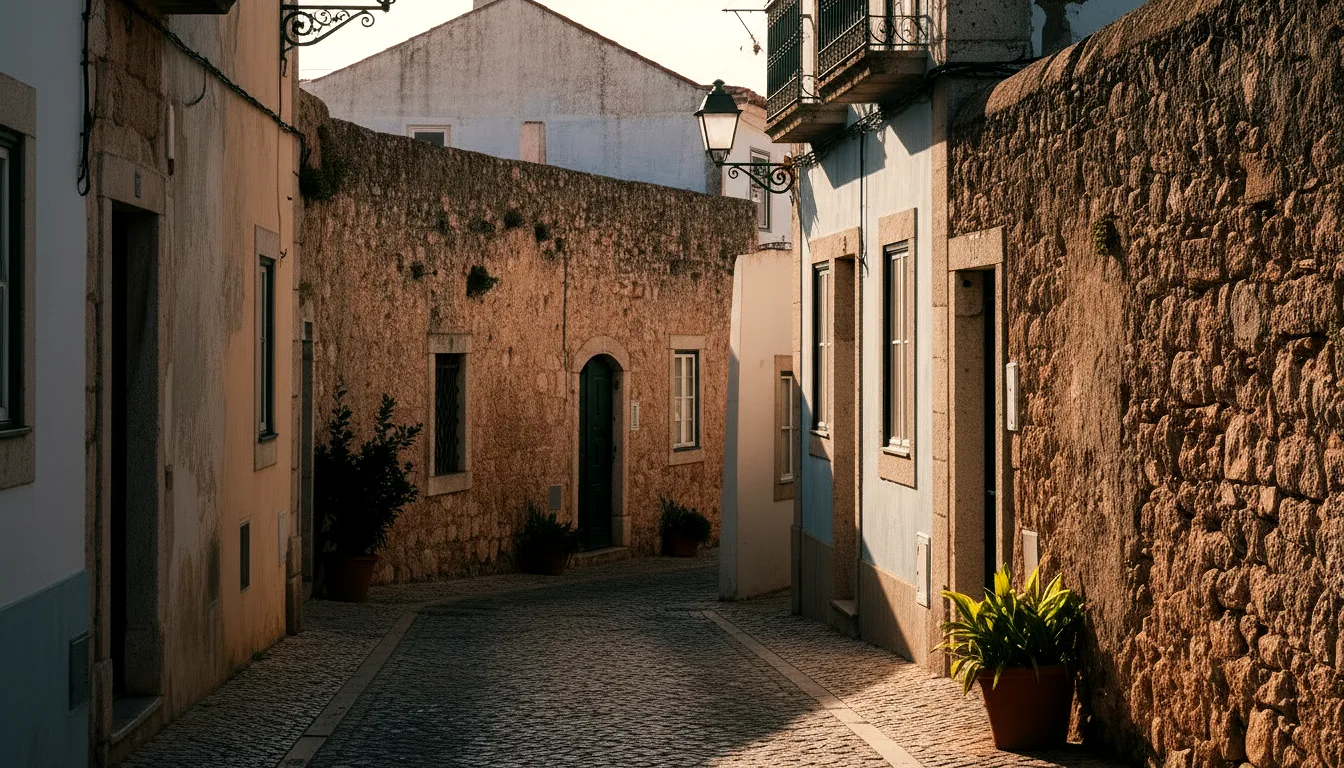
Lagos, by its physical design, produces low cognitive load. The streets are legible — narrow enough to feel intimate, but connected enough to prevent disorientation. The coastline provides a natural reference point. The centre is compact, which means that even a wrong turn leads somewhere interesting rather than somewhere frustrating. The city does not punish exploration; it rewards it.
This has a direct effect on how guests experience their stay. In high-friction cities — where navigation is complex, parking is stressful, and distances require constant planning — guests arrive at the property already depleted. They need more from the accommodation because the environment gave them less. In Lagos, the opposite tends to happen. Guests tend to arrive relaxed, orient themselves quickly, and begin their stay with a lower baseline of anxiety. The property does not need to compensate for the city. It only needs to be consistent with it.
2. The Common Illusion of the Sector
Why destination marketing misses what actually matters
Most content about Lagos — and about Algarve destinations in general — focuses on what to do. Best beaches. Best restaurants. Best viewpoints. Hidden gems. The assumption is that a destination's value lies in its attractions, and that the guest's satisfaction is proportional to how many of those attractions they experience.
This assumption is common, but it often misses what behavioural research suggests about satisfaction in extended stays. For a guest spending a week or more in a city, the daily experience matters more than the highlights. How easy is it to buy groceries? How stressful is parking? How far is the nearest café? These mundane variables shape the baseline quality of the stay — and the baseline, not the peaks, is what determines overall satisfaction in longer visits.
The industry tends to overlook this because mundane variables are harder to market. "Lagos has beautiful cliffs" is an easy message. "Lagos has a walkable centre with evenly distributed daily amenities" is a harder sell — but it is closer to the reason why guests actually enjoy being there.
There is also a familiarity effect at work. Guests who return to Lagos often cannot articulate exactly why they prefer it. They say it "feels right" or "just works." What they are describing, without the vocabulary for it, is low cognitive friction — an environment that asks very little of them and therefore allows them to be present rather than constantly managing logistics.
3. Reframing
Lagos as a cognitive environment, not just a destination
What if, instead of describing Lagos by its attractions, we described it by its cognitive profile — the set of environmental characteristics that determine how much effort a stay requires?
Walkability and autonomy. The historic centre is entirely pedestrian-friendly. Many guests staying within or near the centre do not need a car for daily life. This eliminates an entire category of friction — parking, navigation, fuel, traffic — that dominates the guest experience in many competing destinations. A guest who walks everywhere makes fewer logistical decisions per day, which leaves more cognitive space for the experience itself.
Zone clarity. Lagos is not a single environment. It is a set of clearly differentiated zones, each suited to a different type of stay:
The historic centre offers walking culture, cafés, local energy, and proximity to everything. It suits guests who want immersion and convenience. Meia Praia offers space, a long beach, and a quieter rhythm — suited for families and guests who value openness over density. Porto de Mós offers a more premium, residential setting with extraordinary sunset views — suited for guests seeking calm and visual richness. Residential areas like Ameijeira and Torraltinha offer local neighbourhood life, larger properties, and a quieter rhythm — suited for longer stays and families who want routine over novelty. These zones sit at a comfortable distance from the centre — typically 15 to 20 minutes on foot or a short drive — which means they offer calm without isolation. Daily amenities such as supermarkets and cafés are accessible within the neighbourhood, but the historic centre and main beaches require a short walk or a car depending on the guest's preference.
Matching the guest to the right zone before arrival is one of the most effective ways to reduce friction during the stay. A guest in the wrong zone for their profile will generate more questions, more dissatisfaction, and more operational load — regardless of how good the property is.
Seasonal rhythm. Lagos has a pronounced but manageable seasonal curve. May through June offers the best balance of weather and low density. September offers warmer sea conditions than spring, and both September and early October tend to bring a more local, unhurried atmosphere. July and August are peak season — functional but crowded, particularly in the centre and at popular beaches. Understanding this rhythm allows both guests and operators to calibrate expectations.
Car dependency. The practical rule: if the stay is in the historic core, a car is largely unnecessary and often adds friction. If the stay is in a residential zone like Torraltinha, a car is not essential — the centre is reachable on foot — but it becomes a clear convenience, particularly for beach access and evening returns. For guests who want to explore the wider coastline toward Sagres or Burgau, a car is a net positive regardless of zone.
4. The LusiberiaStays Approach
How Lagos shapes property management decisions
At LusiberiaStays, the cognitive profile of Lagos directly influences how properties are managed and how guests are guided.
Guest matching. Before arrival, communication is designed to align the guest with their zone. A couple seeking nightlife and café culture is guided toward the centre. A family with young children is oriented toward Meia Praia or residential areas. This is not concierge advice — it is an operational filter. The right match reduces questions, complaints, and the probability of a mismatch between expectation and experience.
Information architecture. Rather than providing a comprehensive guide to Lagos — which would increase cognitive load — LusiberiaStays provides focused, property-specific guidance. A guest at Blue Heaven in Torraltinha receives information calibrated to that specific zone: the nearest supermarket and café options within walking distance, the realistic walking time to the centre and main beaches, and clear guidance on when a car adds value versus when walking is the better choice. The goal is not to pretend the property is in the centre — it is to make the guest comfortable with the actual rhythm of the neighbourhood, so that the distance feels like an advantage (quiet, space, local life) rather than a limitation.
Operational load calibration. Properties in Lagos tend to generate fewer guest-initiated communications than properties in more complex environments — and this is partly attributable to the city itself. When the environment is legible and the daily routine is frictionless, the guest self-manages more effectively. This lower communication load is not taken for granted; it is treated as a feature of the territory that the operational model is designed to preserve. Anything that increases unnecessary complexity — unclear directions, excessive house manual content, information overload — works against the advantage that Lagos naturally provides.
Predictable managed days in context. Lagos, as a territory, tends to produce a higher ratio of predictable managed days than more complex or logistically demanding locations. This is not because the properties are inherently different, but because the environment reduces the variables that typically generate incidents. Understanding this allows LusiberiaStays to calibrate expectations for owners: Lagos properties tend toward operational stability, which is reflected in consistent reporting and fewer emergency interventions.
Conclusion
Lagos is not remarkable because of its cliffs, its beaches, or its history — though all of those are real. Lagos is remarkable because it works. It works at a pace and a scale that allows people to stop managing their day and start living it.
For a guest, this means a stay with less friction, fewer bad decisions, and a sense of ease that is difficult to find in more complex destinations. For a property owner, this means an environment that naturally supports operational stability — fewer incidents, lower communication load, and a guest who tends to arrive already predisposed to satisfaction.
The best destinations are not the ones with the longest list of attractions. They are the ones that require the least effort to enjoy. Lagos, by its design, is one of those places — and understanding why it works is as important as knowing what it offers.